
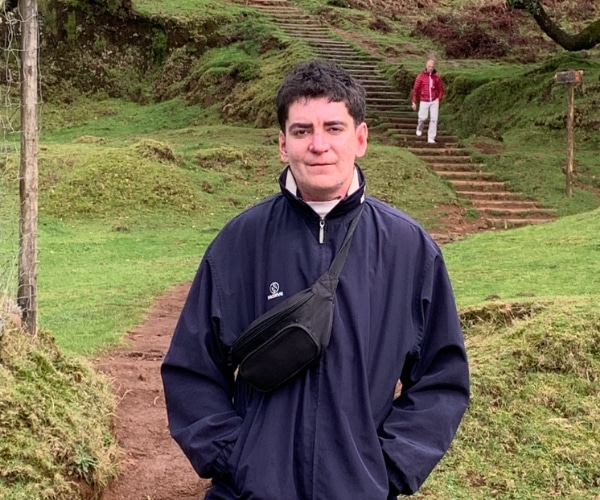
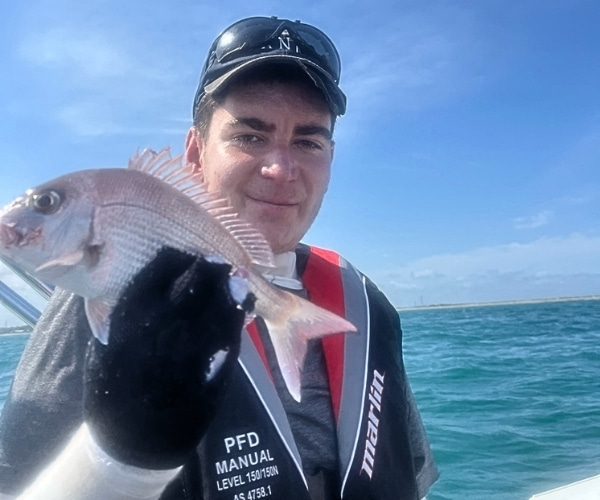
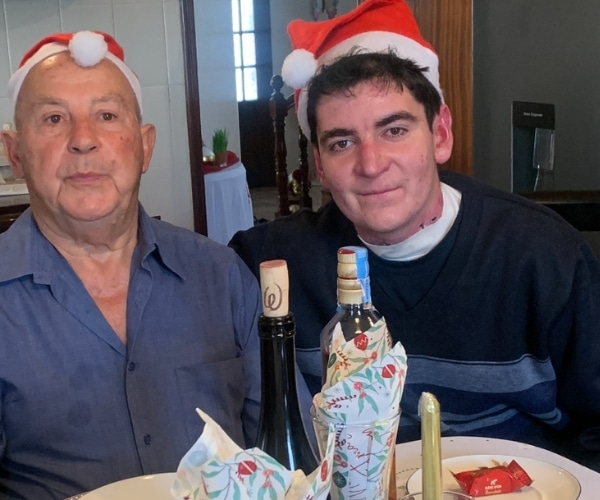
Meet Alessio: For 22-year-old Alessio, living with Epidermolysis Bullosa (EB) is something he has never known life without.
Born in South Africa with a blister on his leg, Alessio was diagnosed with recessive dystrophic EB (RDEB) as a baby. With no family history of the condition, the diagnosis came as a shock to his parents, who quickly found themselves navigating a rare disease with very little information available locally.
“My mum became very active in my care,” Alessio says. “She would print out diagrams showing how to do my bandages and reach out to people overseas for advice.”
When Alessio was six years old, his family moved to Australia. Growing up, he always knew he had a medical condition, but his parents encouraged him to live as normal a life as possible. While he could not participate in contact sports such as soccer, he was able to take part in most school activities and learned to carefully judge what his body could manage.
Today, EB remains a significant part of Alessio’s daily life. He spends around 90 minutes every day completing dressing changes, follows a high-calorie diet to support wound healing, and regularly sees a range of medical specialists. Much of his nutrition comes through liquid supplements, helping him maintain the 2,400 to 3,000 calories he needs each day.
“EB takes up every aspect of my life,” he says. “But people with EB become very good at adapting.”
One of the biggest challenges Alessio faced growing up was ongoing corneal abrasions, a painful complication that affected his eyes. During high school, the condition became so severe that he was forced to leave Year 10. For long periods he was unable to tolerate light and spent days at a time in dark rooms.
It was through connecting with the wider EB community that his family discovered a solution. Another person living with EB recommended specialised bandage contact lenses, which protect and hydrate the eye. The treatment dramatically improved his quality of life.
“Finding other people with EB and sharing experiences has helped us so much,” Alessio says.
These days, Alessio is studying media and communications at university and hopes to pursue a career in journalism. He is also becoming more comfortable speaking publicly about life with EB and raising awareness of the condition.
For many years, he preferred not to engage with his diagnosis. Although he attended an EB camp as a child, he found it overwhelming and chose not to connect closely with the EB community. More recently, however, he has recognised the value of sharing experiences and helping others access information and support.
Living with a visible condition can bring its own challenges: “Sometimes I can be walking in the shopping centre and someone can just come up to me and ask if I’ve been burned, I try to explain to them it’s like eczema but more severe, because people know what eczema is. Sometimes I can be asked several times per week by strangers. Sometimes it feels like it’s more for them, they bring in their own issues, like telling me that some family member has something, I become like a sort of counsellor, and I really just want to get to the shops and get on with my day.”
Despite the challenges, Alessio continues to pursue his goals while managing the realities of life with EB. Careful planning is required for even simple activities. When he travelled to Portugal in 2024 to visit family, months of preparation were needed to organise flights, dressings and enteral feeding supplies. The family travelled with around ten suitcases of medical equipment and supplies.
Alessio recently connected with DEBRA Australia and hopes that greater awareness of EB will make life easier for future generations.
“There are a lot of things I wish I’d known sooner,” he says. “Giving people the resources to find information and connect with others can make a huge difference.”
As one of only a small number of Australians living with his form of EB and the only one in WA, Alessio’s story highlights both the daily challenges and remarkable resilience of people living with this rare condition. Through sharing his experiences, he hopes to help others feel less alone and better equipped to navigate life with EB.