
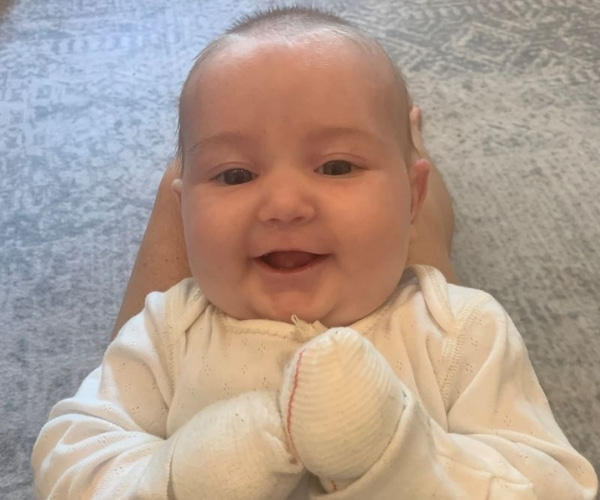
When Erica first held her daughter Ella, she saw only what every parent hopes for; a perfect baby, finally here after a long and emotional journey to grow their family. But within hours, everything changed.
Doctors noticed something wasn’t right. Parts of Ella’s skin on her feet, knee and ankle were missing. Soon after, Erica and her partner Tom heard words they had never encountered before: Epidermolysis Bullosa, or EB, a rare genetic condition that causes the skin to blister and tear at the slightest touch, often described as being as fragile as butterfly wings.
Those first moments were filled with fear. “I was scared to pick her up,” Erica later shared. What should have been instinctive: holding her newborn, feeding her, dressing her all suddenly required training, precision and courage. Specialist teams were called immediately. Ella’s fragile skin needed urgent protection, with careful bandaging to cover wounds and prevent further damage.
For Erica and Tom, it was overwhelming. Like many families, they had never heard of EB before Ella’s birth. Now they were learning, moment by moment, how to care for a baby whose skin could blister from even the gentlest friction.
The early days became a series of delicate routines. Bandages to protect her skin. Soft clothing to reduce friction. Modified nappies to avoid rubbing. Careful feeding adjustments when blisters formed in her mouth. Even the simplest cuddle required thought. This is the reality for many families living with EB; where wound care, pain management and prevention of injury become part of everyday life from day one.
Amid the uncertainty, support made all the difference.
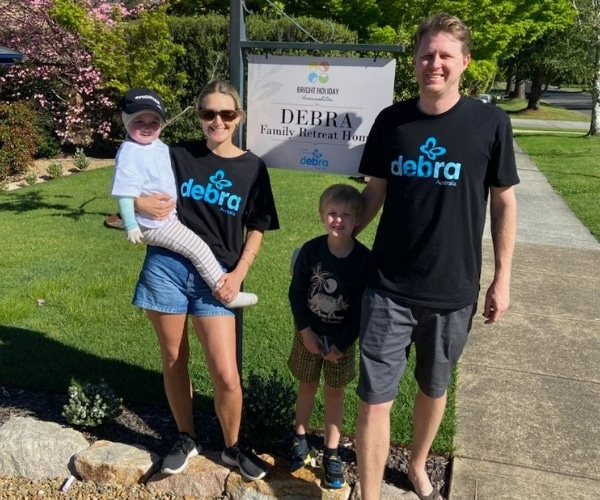
DEBRA stepped in early and became a vital part of Ella’s care journey. Prior to NDIS access, DEBRA funded 12 hours of nursing support per week, helping the family manage the complex care Ella required at home. They also provided financial assistance to help cover additional costs associated with EB, including specialised items not covered by NDIS.
Beyond practical help, DEBRA connected the family with other families across Australia living with EB. That sense of community proved invaluable: offering both practical advice and emotional understanding that only other EB families can provide.
Emotional support has also been ongoing. DEBRA offers free counselling for parents, caregivers and immediate family members, which Erica continues to access. In addition, respite weekends for mums and dads have provided rare opportunities to rest, recharge and connect with others who truly understand the demands of caring for someone with EB.
At the centre of this support has been DEBRA’s Family Support Coordinator, Simone, who has been an unwavering presence since Ella’s birth.
“Simone understands EB and the impact it has on every aspect of life,” Erica says. “She is someone we have been able to lean on when we needed support and one of our family’s biggest advocates.”
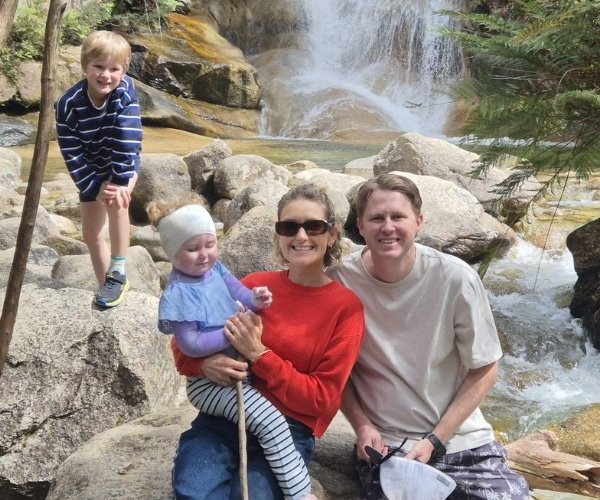
At home, Ella’s older brother Archie quickly became her protector. “You have to be gentle with my sister,” he tells anyone who meets her. In a household adjusting to a new diagnosis, these moments matter deeply as reminders that alongside challenge, there is also compassion, strength and love.
Today, Ella is a happy, determined little girl. She loves music, being outdoors and spending time with her family. Like many children with EB, she continues to grow and develop at her own pace, supported by regular specialist clinic visits. While there is currently no cure for EB, treatments focus on improving quality of life by protecting skin, managing wounds, reducing pain and supporting overall health.
For Erica and Tom, life looks different than they once imagined, but it is still filled with joy. Like every parent, they want Ella to experience the world: to play, to learn and to feel included. “We just want her to live as normal a life as possible.” And she is.
Because behind every bandage is a child with personality, curiosity and strength.
In Australia, around 1,000 people are living with EB. Many families receive the diagnosis without warning. Sharing stories like Ella’s helps raise awareness, build understanding, connect families and drive vital support and research. Most importantly, it reminds everyone inside and outside the EB community that no one is alone on this journey.
Ella is more than her condition. She is a daughter, a sister, a bright little personality and, as her family says, their beautiful little butterfly.